

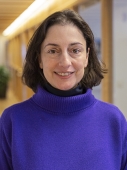
About half of the world’s languages use grammatical gender to sort nouns into different categories. Marit Westergaard, professor of English Linguistics at UiT The Arctic University of Norway, seeks to improve our understanding of this linguistic phenomenon with her CAS project.
2019/2020
MultiGender
MultiGender
A Multilingual Approach to Grammatical Gender
Humanities

Principal investigators
Abstract
Language is one of our most complex cognitive abilities. The MultiGender project studied one linguistic pheno¬menon, grammatical gender, from a variety of perspectives, with data from various groups of multilinguals speaking languages with different gender systems. Grammatical gender is a category sorting nouns into different classes. For example, in most Norwegian dialects we may identify three genders, masculine, feminine, and neuter: en bil ‘a car’, ei bok ‘a book’, and et hus ‘a house’. Some languages have two genders (e.g. Italian), while others have no grammatical gender (e.g. English). Gender is subject to significant variation across the world’s languages, not only with respect to the number of gender classes, but also transparency of gender assignment and relation to other properties (case, definite¬ness), etc.
MultiGender brought together world-leading experts from several disciplines of language science, including formal linguistics, processing, multilingualism, acquisition/attrition, and historical language change. The project focused on three different areas: i) how gender varies across dialects, languages, and multi¬lingual individuals, ii) how gender is acquired in multilingual contexts, and iii) how gender may change due to reduced input and use. A core question was whether or not grammatical gender is the same category across multiple languages.
Fellows
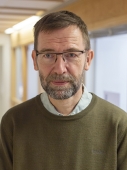
Tor Anders Åfarli
Professor
Norwegian University of Science and Technology (NTNU)
Year at CAS



Ingrid Marie Heiene
PhD Candidate
Norwegian University of Science and Technology (NTNU)
Year at CAS


Tanja Kupisch
Professor
University of Konstanz & UiT The Arctic University of Norway (UiT)
Year at CAS
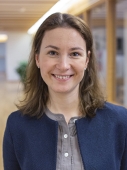
Natalia Mitrofanova
Postdoctoral Fellow
UiT The Arctic University of Norway (UiT)
Year at CAS
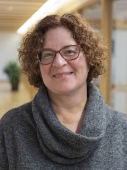
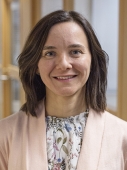

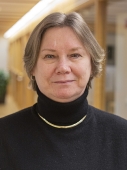
Irina Sekerina
Professor
College of Staten Island of the City University of New York
Year at CAS

News
CAS is all about being together. The Corona pandemic forces us to work differently. Now that their fellows are spread worldwide, Terje Lohndal and Marit Westergaard have moved their seminars online, but you can still read about their research.